

Cart
0
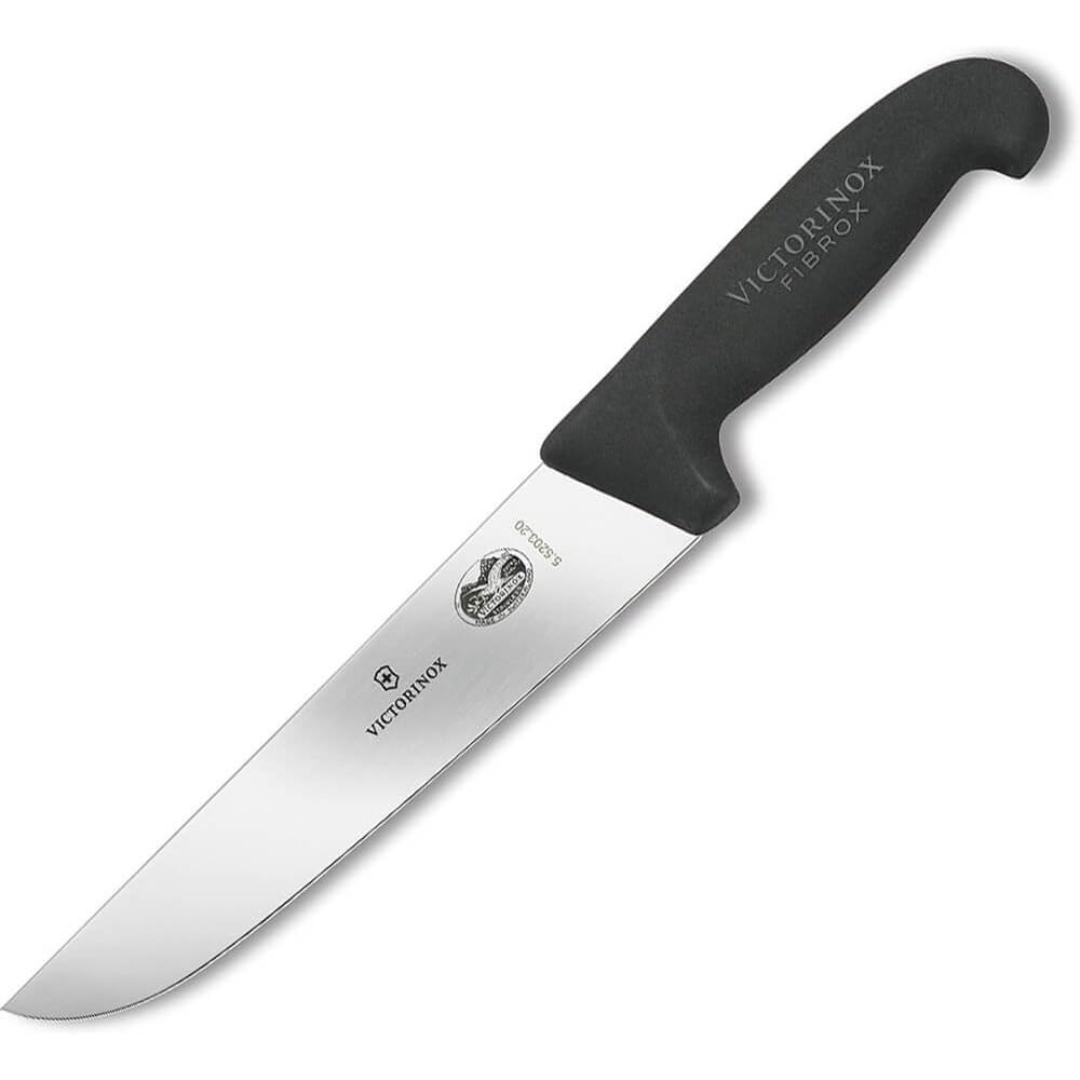
For a busy butchery, supermarket meat counter, hotel kitchen or meat-processing operation, the right knife is a productivity tool. Blade length, profile, grip and the task being performed all affect cutting speed, control, yield and operator fatigue.
Victorinox Fibrox professional knives are particularly well suited to commercial food-service environments. The Fibrox collection is NSF-certified, and its textured handles are designed to provide a secure grip during demanding preparation work.
Which butcher knife size should you choose?
There is no single best size for every operation. A compact 6.5-inch knife gives excellent control for smaller cuts and trimming. A 7-inch or 8-inch butcher knife is a versatile everyday choice for portioning and general meat preparation. Larger 10-inch and 11-inch knives provide additional reach for bigger primal cuts and higher-volume work.
For many professional butcheries, an 8-inch model is a practical starting point. See the Victorinox Fibrox 8-inch butcher knife available from Red Rhino.
Butcher knife vs boning knife
A butcher knife is designed for portioning, trimming and making longer cuts through meat. A boning knife is narrower and more precise, allowing the blade to work close to bones, joints and connective tissue. Commercial meat preparation normally benefits from having both rather than expecting one knife to perform every task.
For detailed work, explore the Victorinox Fibrox 6-inch curved narrow boning knife.
When should you use a wide-tip butcher knife?
Wide-tip butcher knives provide a broader blade profile and are useful when handling thicker cuts or when the operator wants more cutting surface. Red Rhino carries multiple Victorinox Fibrox butcher-knife profiles and sizes, including wide-tip options for professional meat preparation.
Why Fibrox works for commercial butcheries
- NSF-certified Fibrox collection: relevant for professional food-service procurement.
- Textured handles: designed for secure handling during repetitive preparation.
- Multiple blade lengths: lets a butchery build a workstation around specific tasks instead of relying on one general-purpose knife.
- Professional range: butcher, boning and chef-knife profiles can be combined into a coherent commercial knife set.
Choosing knives for a Kenyan butchery
Start by mapping the actual workflow: deboning, trimming, portioning, slicing and large-cut processing. High-volume operations should also consider whether different stations need different blade lengths. A smaller knife may be faster and safer for precision work, while longer knives can improve efficiency on large cuts when used by trained operators.
Browse the Victorinox collection at Red Rhino and the wider kitchen knives range for available professional options in Kenya.
Frequently asked questions
What is the best Victorinox butcher knife size?
For general professional use, 7-inch and 8-inch butcher knives offer a useful balance of reach and control. Larger 10-inch and 11-inch models are better suited to larger cuts and higher-volume processing.
Do I still need a boning knife?
Yes. A boning knife is designed for close, precise work around bones and joints, while a butcher knife is better suited to broader portioning and trimming tasks.
Is Victorinox Fibrox suitable for professional food service?
Yes. Victorinox positions Fibrox for professional use, and the Fibrox collection is NSF-certified.
Can hotels and restaurants use the same knives?
Yes, but the optimal mix depends on the menu and preparation volume. Hotels and restaurants may require chef's knives, paring knives and boning knives alongside butcher knives.
Where can I buy Victorinox butcher knives in Kenya?
Red Rhino stocks a broad range of Victorinox professional knives for customers in Nairobi and across Kenya, subject to current availability.
For a broader hospitality procurement overview, read our Victorinox Fibrox guide for hotels and professional kitchens.


