

Cart
0
The best watch for you is the one that fits both your wrist and the job you expect it to do. A polished designer watch can finish an outfit beautifully. A GPS smartwatch can record a run, guide a workout and help you review your activity. Those are different reasons to buy, and neither automatically makes one watch a better purchase.
Before comparing prices in Kenya, decide whether your priority is appearance, everyday timekeeping, fitness tracking, navigation or a combination. This guide brings those decisions together so you can build a useful shortlist rather than buy the model with the longest feature list.
Start with an ordinary week
Think about the watch on a normal Monday, not just on a holiday or race day. Will you wear it to an office, sleep in it, use it during a morning run, or put it on mainly for dinners and celebrations? Does your work involve frequent hand washing, movement or equipment that can catch a loose bracelet? Do you already carry your phone whenever you train?
Write down your three most frequent uses. Then separate essential functions from attractive extras. A swimmer needs the exact model's permitted water activities. A runner may prioritise clear lap information and reliable activity recording. Someone buying an anniversary gift may care more about finish, proportion and whether the recipient enjoys connected devices.
There is also a sensible case for owning two different watches: a comfortable training watch and a designer watch for other occasions. Only choose that route if both have a clear role in your life and budget.
Traditional watch, designer watch or smartwatch?
| Category | Useful starting point | Check before buying |
|---|---|---|
| Traditional analogue watch | Timekeeping, styling and a familiar dial | Movement, case dimensions, bracelet adjustment and water-care instructions |
| Designer watch | Finish, dial detailing and an accessory that complements your wardrobe | Exact model, colour, materials, seller and warranty terms |
| Everyday smartwatch | Activity records, notifications and fitness features | Phone compatibility, display, charging routine and supported local services |
| Running or multisport GPS watch | Training records, sport-specific controls and selected navigation functions | GPS modes, maps, sensors and battery life for the activity you actually do |
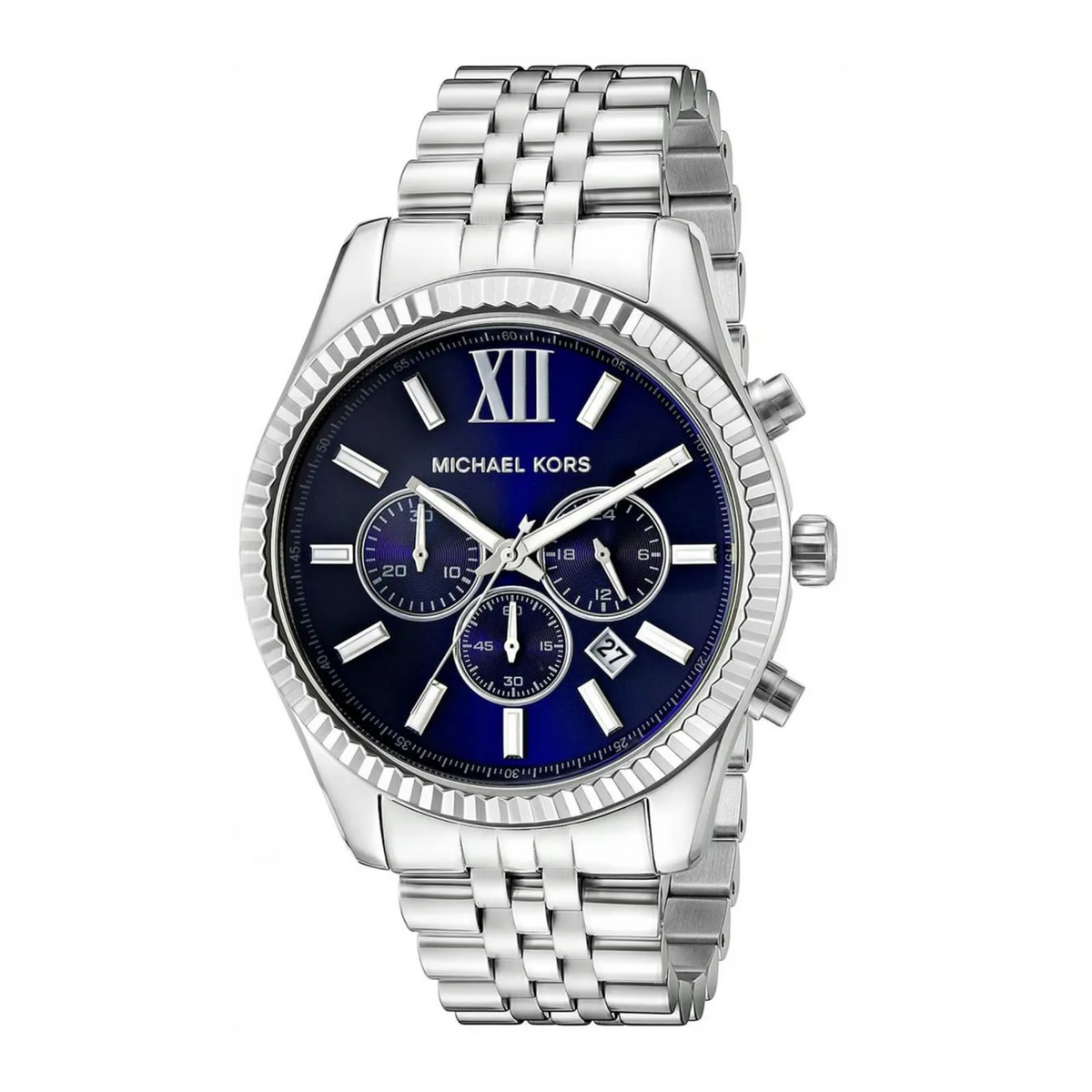
Designer and traditional categories overlap. For example, the Michael Kors analogue watches in our range combine timekeeping with recognisable design. They should not be compared with Garmin fitness watches as though the only difference were a brand logo. Read the Michael Kors buying guide for a style-focused shortlist.
What changes when you choose a smartwatch?
A smartwatch creates a relationship with an app, charging cable and settings menu. That can be useful when you want a record of your activity, but it also introduces decisions that a conventional watch does not require. Check whether the watch works with your phone and what functions need that phone nearby.
Notifications, calls, offline music, payment support and satellite connectivity are separate capabilities. A microphone does not prove that a watch has standalone cellular calling. A music-control function does not prove that it stores music. A GPS receiver does not prove that it has full maps. Read the exact specification and ask what additional accessories, subscriptions or compatible services are required.
For a fitness-focused shortlist, the Garmin watch buying guide explains the main families. Garmin is a useful starting point when training and activity are priorities; it is not a reason to skip fit or local feature checks.
Case size and comfort deserve their own comparison
A watch can look restrained in an enlarged product photograph and substantial on a smaller wrist. Case diameter is only one dimension. Thickness, shape, the length across the strap attachment points and the weight of the complete watch all influence how it sits.
A metal bracelet has a different feel from a soft silicone sports strap. A polished finish catches light; a quieter dial can be easier to coordinate with different clothing. A lighter watch may be preferable for sleep tracking or long training sessions. These are reasons to compare dimensions and materials, not guarantees that a particular finish will suit everyone.
Measure your wrist and check the manufacturer's stated fit range where available. With a bracelet, ask about adjustment rather than assuming the delivered fit will be correct. If buying a gift, learn the recipient's preferred size from a watch they already wear. Our watch sizing and care guide explains the practical checks.
Read battery claims in the right mode
A smartwatch claim measured in days and a GPS claim measured in hours answer different questions. The first may describe everyday use. The second concerns activity recording with the satellite receiver operating. Always-on display, music, sensors and the chosen GPS mode can affect endurance.
For someone who trains once or twice a week, charging convenience may be more important than the maximum number on a comparison chart. For a long event, the relevant activity mode and a sensible reserve matter more. Compare the same mode between exact models, then ask how your settings would differ from the manufacturer's assumptions.
A conventional quartz watch usually has a replaceable battery rather than a smartwatch charging routine. Check the exact movement and service requirements. Do not assume that an analogue-looking watch is mechanical or automatic.
Water resistance is a usage instruction
Read the manufacturer's guidance for the exact model. A number expressed in metres or ATM does not give unrestricted permission to take a watch to that depth during every activity. Pressure, seals, operating controls in water and ageing can matter. A leather strap may also require different care from the watch case.
For a watch intended for swimming, check whether swimming is an approved use. For diving, check the specific dive rating and instructions. Never treat an ordinary watch as dive equipment just because a pressure rating appears on the listing.
How to compare watch prices in Kenya fairly
Match the exact model identifier before comparing two prices. Similar cases can conceal different sizes, finishes, music versions or features. A Garmin family name alone is not enough to identify the variant; a Michael Kors style number such as MK3179 identifies a much more specific design.
Build a comparison with five columns: exact model, intended use, fit, functions you will use and total ownership cost. That last column can include required accessories, subscriptions, bracelet adjustment, battery service or a replacement strap. The most expensive watch is not automatically the most useful, and the cheapest listing does not establish the best overall value.
Use current product pages for KSh prices rather than an old blog table. Availability and promotions can change. Ask the retailer to resolve any inconsistent colour or specification before ordering.
Choose a seller you can identify and contact
Keep the order confirmation and receipt. Ask who provides warranty support, which faults are eligible and which exclusions apply. A retailer warranty and a manufacturer warranty are different commitments; a long headline warranty period is not a substitute for reading the terms.
Model identifiers, clear product information and an accountable seller are useful checks. Packaging or a very convincing photograph alone does not settle authenticity. Read our guide to choosing a trusted online retailer in Kenya if you are comparing unfamiliar sellers.
A useful three-watch shortlist
- Your practical choice: the watch that meets the essential requirements and fits comfortably.
- Your upgrade choice: the model with a clearly useful extra feature, with its additional cost written down.
- Your style alternative: a design you prefer, checked against the same fit and ownership questions.
If you cannot explain why the upgrade improves your week, return to the practical choice. If the style alternative makes you happier to wear it and meets the essential requirements, that preference has value too. A shortlist should help you decide, not make the comparison endless.
Frequently asked questions
Which watch should I buy in Kenya?
Begin with your main use, wrist fit and budget. Choose traditional or designer models for timekeeping and styling, and compare smartwatches when activity records and connected features are useful.
Can a designer watch replace a fitness smartwatch?
It can meet your timekeeping and styling needs, but an ordinary analogue designer watch does not provide a GPS training record or smartwatch notifications.
Is a bigger smartwatch always better?
No. Screen visibility and endurance can vary with size, but the watch also needs to stay comfortable during your intended activities.
Where can I compare watches at Red Rhino?
Browse watches and smartwatches and the Michael Kors collection. For a Garmin model shortlist or a specification question, contact Red Rhino to confirm current options.
Continue your watch research
Sources and editorial scope
Prepared by Red Rhino from manufacturer documentation and our exact-model catalogue, checked 3 October 2026. These are buying guides, not hands-on test results. Confirm current price, stock and specification before ordering; regional features and services can change.


