

Cart
0
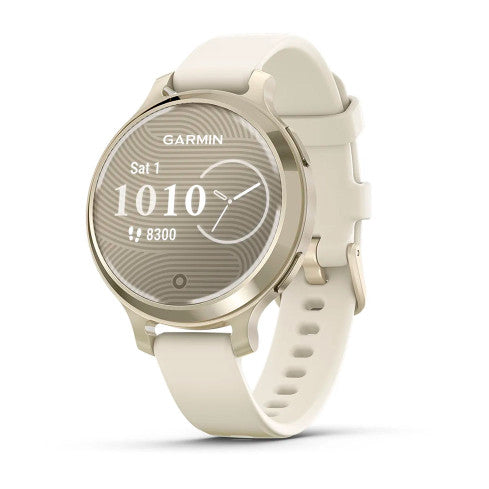
Watch fit is a combination of case shape, dimensions, strap adjustment and your own comfort. Diameter gives you a starting point, but it does not tell the whole story. A well-chosen watch should stay secure and suit the movements you make during your normal day.
These checks apply whether you are comparing a Michael Kors bracelet watch, a smaller Garmin Lily or a larger multisport watch. Use the manufacturer's instructions for the exact product when fitting, cleaning or changing an accessory.
Measure your wrist first
Use a flexible measuring tape around the position where you normally wear a watch. If you use a strip of paper instead, mark the overlap and measure it against a ruler. Record the circumference without pulling excessively tight.
Compare that measurement with the manufacturer's stated wrist range, where available. The range describes the supplied setup; a replacement band can have a different fit. Avoid choosing solely from labels such as small, midsized, men's or women's.
For a gift, use a watch the recipient already enjoys as a reference. Note its scale, shape and strap type. If you cannot establish their preference, ask about adjustment and return eligibility before choosing a size-sensitive gift.
Four dimensions that affect everyday fit
- Case width: the part most often discussed in a listing, but not the complete footprint.
- Thickness: relevant to sleeves and how the watch rests during movement.
- Shape and strap attachment: these affect how it spans your wrist.
- Complete weight: compare the watch with its strap or bracelet, rather than mixing case-only and complete weights.
A rectangular watch and a round watch with similar quoted dimensions can wear differently. Product photographs also change perceived scale. Use measurements to narrow the shortlist, then assess whether the proportions suit you.
Garmin examples show why the size label is not enough
Lily 2 Active lists a 38 × 38 × 11 mm case and a 110–175 mm wrist range. Forerunner 265S lists 41.7 × 41.7 × 12.9 mm with a 115–178 mm range. Forerunner 265 is larger at 46.1 × 46.1 × 12.9 mm and lists a 135–205 mm range.
Those are useful manufacturer starting points, not guarantees of comfort. Consider the screen you want to read, how often you will wear the watch and whether you intend to sleep in it. The correct choice balances those needs rather than assuming that a smaller or larger model wins.
Sports-strap adjustment
Follow the model's wear instructions, particularly when using a wrist sensor. The watch should remain suitably positioned without unnecessary pressure. A fit that feels acceptable while sitting can behave differently during movement.
Check the strap through an ordinary day before relying on the watch for a long session. Notice whether it slips, catches on clothing or feels uncomfortable. If skin irritation develops, stop wearing it and follow appropriate care guidance rather than tightening it further.
Metal bracelet adjustment
Ask how bracelet sizing is handled for your exact watch. If links are removed, keep them for future adjustment. Check that the clasp closes securely and that the bracelet does not restrict normal movement.
Do not assume two watches from the same design collection have identical bracelets or adjustment systems. If the product needs a specialist process, use the appropriate service rather than improvising with tools that may damage the finish.
Replacement straps: width is only the first check
A strap described as 20 mm does not automatically fit every 20 mm watch. Confirm attachment system, exact watch generation, case size, pin arrangement and any manufacturer compatibility list. Garmin QuickFit and quick-release descriptions should not be treated as interchangeable labels.
Likewise, different sizes within a watch family can use different band widths. Keep the full watch name and part number when requesting a replacement. If compatibility information is inconsistent, resolve it before buying rather than relying on a familiar family name.
Material also changes use and care. A sports strap, leather band and metal bracelet may need different cleaning routines. Choose an accessory that suits both your watch and the way you intend to wear it.
Cleaning and charging a smartwatch
Garmin's wear-and-care guidance recommends regular cleaning and attention after activity to remove sweat and residue. Use the permitted method for the watch and band material; do not assume that a cleaner suitable for one component is safe for every part.
For the Forerunner 265 series, Garmin's cleaning instructions describe rinsing with water or using a damp lint-free cloth. They also warn that moisture or debris at charging contacts can contribute to corrosion. Follow the manual and make sure the relevant parts are suitably dry before charging.
Check the charging contacts and accessory as part of the routine. If charging remains unreliable, seek the appropriate support instead of scraping contacts or forcing a connector. Use a cable documented as compatible with the exact device.
Designer-watch care
Use the care information supplied for the exact model, including its water-use instructions and finish. A pressure rating does not eliminate the need to protect a crown, seals or decorative details according to the manual.
A quartz watch requires its own battery-service process. If the case needs to be opened, ask how the service handles seals and any applicable water-resistance checks. Keep documentation and avoid assuming a watch remains suitable for every water activity after unverified servicing.
Small habits that make ownership easier
Store the watch and relevant accessories where they will not be knocked around. Keep the model number, receipt, removed bracelet links and care instructions together. When ordering a replacement accessory, confirm the model again rather than relying on an old photo.
If you notice a change in fit, clasp behaviour or charging, deal with it before a long session or trip. A familiar, comfortably adjusted watch is more useful than an impressive specification attached to a poorly maintained setup.
Frequently asked questions
How do I know which watch size fits?
Measure your wrist, compare the stated fit range and full case dimensions, then assess comfort for your intended use.
Will any strap with the right width fit?
No. Check attachment type and exact-model compatibility as well as width.
Can I charge my Garmin immediately after an activity?
Follow the exact manual's cleaning and drying instructions, especially for the charging contacts. Do not connect it with moisture or debris present.
Compare the Michael Kors collection or read the Garmin range guide. Contact Red Rhino with the exact model if you need help with fit or an accessory.
Continue your watch research
Sources and editorial scope
Prepared by Red Rhino from manufacturer documentation and our exact-model catalogue, checked 3 October 2026. These are buying guides, not hands-on test results. Confirm current price, stock and specification before ordering; regional features and services can change.


