

Cart
0
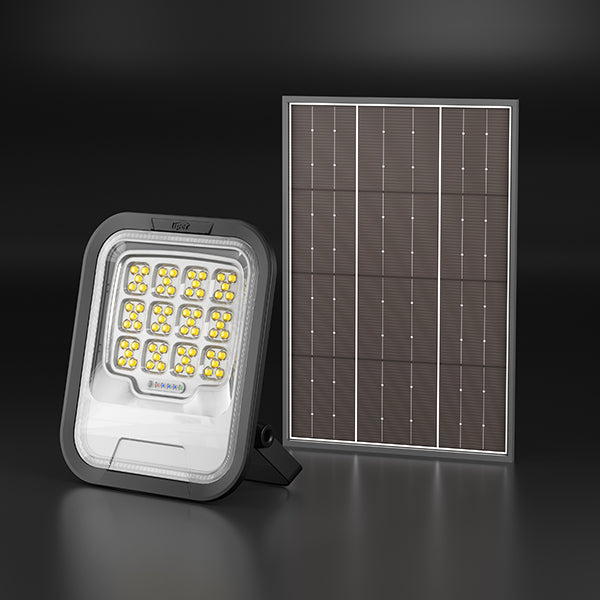
If you are comparing solar floodlights in Kenya, you will quickly encounter 100W, 200W, 300W and 400W models. The natural assumption is that the largest number is always the best choice. In practice, the right size depends on the area, mounting height, solar exposure and actual product design.
Red Rhino currently carries Liper HW-series solar floodlights in several sizes. Browse the live Floodlights & Security Lighting or Outdoor & Solar Lighting collections.
Quick comparison
| Nominal model | Typical starting application |
|---|---|
| 100W | Entrances, smaller compounds, side yards, localized security lighting |
| 200W | Medium compounds, parking bays, workshops, wider gate areas |
| 300W | Larger compounds, yards, farms, commercial exterior areas |
| 400W | Large open spaces where broader or stronger coverage is required |
These are application guidelines rather than guaranteed coverage figures. Actual performance depends on the exact fixture.
100W solar floodlight
A 100W model is a sensible starting point for buyers who need localized outdoor security or utility lighting without installing an oversized fitting. Typical areas include smaller entrances, residential compounds, rear yards and side passages.
200W solar floodlight
The 200W class is useful where the illuminated zone is larger or the mounting point is higher. It can suit medium compounds, parking bays, farm work areas and workshop exteriors.
300W solar floodlight
300W solar floodlights are often selected for larger compounds and security applications. Red Rhino currently stocks Liper 300W models in both 6500K daylight and 3000K warm white.
400W solar floodlight
The 400W model is aimed at buyers looking for the largest option within the current Liper HW range. Use it where the target area is substantial and the panel can receive sufficient daylight.
Why wattage is not enough
When comparing solar floodlights, nominal wattage should not be treated as the only measure of brightness. Compare lumen data when provided, panel size, battery capacity, optical design, housing quality and mounting recommendation. Headline wattage conventions vary significantly across the solar-lighting market.
6500K vs 3000K solar floodlights
6500K produces a cool daylight appearance and is common for functional and security lighting. 3000K produces warm white and can be more comfortable around homes, gardens, restaurants and hospitality spaces. Read our full colour-temperature comparison.
IP65 and outdoor use
Liper's HW solar floodlights listed by Red Rhino are IP65-rated. The IP rating should always be checked before outdoor installation. For more detail, read LED Lighting in Kenya: Lumens, Colour Temperature & IP Rating Guide.
Where solar floodlights work well
- Residential compounds
- Gates and perimeter areas
- Parking spaces
- Farm yards
- Workshops and warehouses
- Loading areas
- Building exteriors
- Temporary or remote work sites
Where a street light may be better
If your target is a long driveway or access road, a streetlight may distribute light more appropriately. See our Solar Street Lights in Kenya guide.
FAQ
Which solar floodlight is best for a house compound?
Choose based on the size of the area and mounting position. A smaller, correctly positioned floodlight can outperform an oversized unit installed poorly.
Should I choose 3000K or 6500K?
Choose 3000K for a warmer appearance and 6500K for a cooler daylight appearance. Both can be used outdoors when the fitting is suitable.
Can a solar floodlight be installed under a roof?
The light can be mounted where appropriate, but the solar panel needs good daylight exposure. A panel permanently shaded by the roof will compromise charging.
Where can I buy Liper solar floodlights in Kenya?
See Red Rhino's Liper Lighting Kenya collection for current Liper solar floodlight models and prices.


