

Cart
0
A useful breakfast station makes your ordinary morning easier. For one household that means tea and toast; for another it means filter coffee, a prepared sandwich and a fruit drink. The right setup begins with those tasks and quantities, not with a requirement to buy every small appliance in one matching colour.
This guide connects electric kettles, coffee makers, bread appliances and food preparation with cups, serving space and care. It is part of the complete kitchen planning guide for Kenyan homes.
Write down the morning sequence
Count the people using the station and when they need it. Four drinks made at once are different from four drinks spread across a morning. Someone leaving early for work may need a simple routine, while a household breakfast can involve several tasks together.
Record which steps happen every day: filling water, brewing, slicing bread, preparing a drink and washing parts. Then identify the repeated delay. Buy the appliance that addresses it before adding equipment for an occasional weekend recipe.
Consider the station after breakfast as well. Wet components need permitted drying space; crumbs and spills need cleanup; attachments need storage. A convenient routine includes the reset, not just the moment when the drinks are served.
Kettle, coffee maker and frother: three different jobs
| Appliance | Primary job | Check before buying |
|---|---|---|
| Kettle | Heat water within its instructions | Capacity, controls, minimum fill and pouring |
| Filter coffee maker | Brew using the specified coffee and filter method | Brew measure, filter arrangement and carafe care |
| Milk frother and warmer | Process milk using the listed modes | Separate working limits, modes and cleaning |
| Toaster | Toast bread in suitable slots | Bread fit, controls and crumb handling |
| Sandwich maker | Cook a suitable filled sandwich between plates | Plate shape, closure and cleaning instructions |
| Blender | Prepare permitted blended drinks | Working quantities, ingredients and cleanup |
A coffee maker is not a kettle with a coffee label. A filter machine and an espresso machine also use different preparation methods. Choose the kind of coffee you want before comparing appliance features.
Choose the kettle for quantity and handling
A small kettle can suit one or two drink routines, while a larger kettle can heat more water in one session. Fill only within the prescribed limits and boil the amount needed. The largest capacity is not always the most convenient format for a compact station.
The Mika MKT3103B 1L kettle illustrates a compact option. The Mika MKT3101DB digital 1.5L kettle illustrates a temperature-control format. Check the exact functions rather than assuming every double-wall model has the same controls.
The existing Philips kettle guide and cross-brand comparison provide alternatives. For the broader purchase-order question, read kettle versus coffee maker.
Coffee: compare the brew routine, not only “cups”
Coffee-maker cup ratings can refer to the manufacturer's measure rather than your household mug. Check reservoir volume and brew guidance if available. A “12-cup” description is not evidence that twelve large mugs can be filled in one brew.
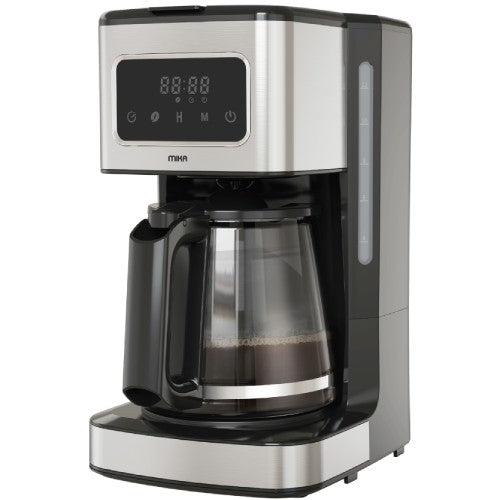
The Mika MCMD2002BS digital 12-cup coffee maker is a filter-coffee option to investigate. Confirm the permitted coffee, filter arrangement, controls and carafe cleaning. If you want espresso-style preparation, choose an appliance explicitly designed for that method instead.
Think about how often you brew and how much you actually drink. Repeatedly preparing a large amount that is not consumed can be inconvenient and wasteful. A suitable flask may support serving or carrying a prepared drink, but check its use and cleaning instructions as a separate item.
Milk frothing: capacity depends on the selected function
Frothing and warming can have different permitted fill levels because the processed milk can expand. Use the exact model's markings and instructions instead of treating the vessel's full volume as the working capacity for every mode.
The Mika MMF1002BS milk frother and warmer is a model example. Compare its listed modes and permitted quantities with the drinks you prepare. Do not assume a separate frother turns filter coffee into espresso or duplicates a steam wand's workflow.
Allow for prompt cleaning according to the manual. A frother used regularly can be convenient, but milk-contact care should fit the morning routine. The appliance-care guide provides a useful way to organise these tasks.
Toaster or sandwich maker?
A toaster suits permitted bread that fits its slots. A sandwich maker suits its specified filled-sandwich routine and plate arrangement. A contact grill may offer another cooking format, but the actual functions and permitted foods depend on the exact model.
Check bread size, thickness and access. Compare whether plates are removable and how crumbs or fillings are cleaned. A product photograph of a toasted sandwich does not establish the slot or plate dimensions for your bread.
Browse toasters, sandwich makers and contact grills. If you already use an air fryer for a suitable occasional bread task, that may influence your purchase priority, but follow its recipe and accessory instructions. The air-fryer guide explains its different cooking arrangement.
Add a blender when drinks are a repeated task
For permitted blended drinks, a blender can serve a breakfast routine. Check ingredient permissions, working quantities and running instructions. Preparing ingredients the appliance cannot process safely defeats the convenience of the station.
Consider cleaning time and the number of servings. A large jug may be practical for a shared batch; a different format may suit a single drink. The preparation-appliance guide explains why blended drinks and extracted juices are different outputs.
Do not buy both a blender and juicer merely because both appear in a breakfast photograph. Decide which drink you prefer and which routine you will sustain.
Arrange space and power around use
Leave a clear pouring and serving area. A carafe, hot kettle and pulled-open sandwich maker need more room than their closed product dimensions suggest. Keep cords and movement paths organised according to the appliance instructions.
Check electrical suitability for the appliances you intend to operate together. Total connected power matters when several heating appliances share a location. Do not treat a convenient multi-socket accessory as proof that any combined load is appropriate.
The small-kitchen guide helps allocate permanent counter space, and the electricity guide explains why a short boil and a long warming session should be budgeted differently.
Buy in stages
Start with the drink or food task used every weekday. Add a second appliance when it serves a clearly different frequent task. Leave occasional-use equipment in suitable storage rather than letting it occupy the whole preparation surface.
A simple tea-and-toast station may need only a suitable kettle, bread appliance, cups and a tray. A coffee-focused station may justify a filter machine and perhaps a frother. A shared station may need larger serving capacity, but verify working measures instead of assuming the biggest number solves the problem.
Breakfast-station do's and don'ts
- Do compare the number of drinks or portions needed at the same time.
- Do check the manufacturer's cup and fill measures.
- Do keep hot pouring and food preparation areas clear.
- Do plan cleaning and attachment storage.
- Don't use a kettle for liquids or foods its instructions prohibit.
- Don't assume every coffee maker makes espresso.
- Don't fill a frother to its warming limit when using a lower frothing limit.
- Don't choose duplicate functions before solving the daily need.
Breakfast appliance FAQs
Should I buy a kettle or coffee maker first?
Choose a kettle for the hot-water tasks you repeat. Choose a coffee maker when its specific brewing method is a frequent priority. Many households use both, but they perform different jobs.
Does “12 cups” mean twelve mugs?
Not necessarily. Check the manufacturer's measure and water capacity. Mug sizes vary, so use your actual serving size when planning a brew.
Do I need a milk frother?
Only if its drinks are a regular part of your routine. Check quantities, modes and cleaning before buying it as an extra accessory.
Can I mix appliance brands?
Yes. Select each exact model for its job and handling. The Mika guide and cross-brand comparison provide connected routes through the options.
How do I compare running costs?
Use energy over the full task, not wattage alone. A brief boil, brewing cycle and warming session have different durations and operating behaviour.
Your next step
Explore kitchen appliances with your morning sequence written down. Verify exact model details and the supplied instructions, including the official Mika catalogue for Mika examples. Prepared on 1 October 2026; current stock, prices and bundles belong on the individual product pages.


