

Cart
0
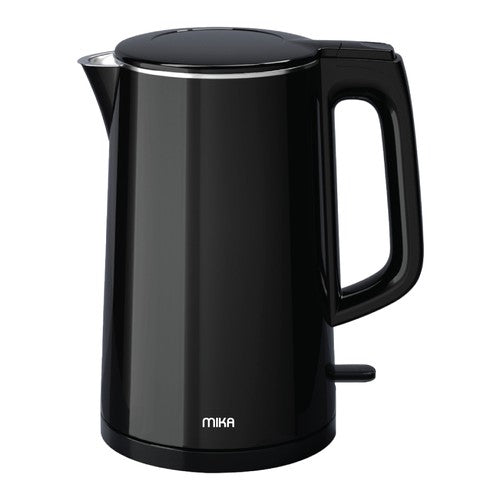
To estimate the electricity cost of an appliance in Kenya, you need three things: power used, running time and an appropriate KSh-per-kWh rate from your own bill or tariff information. Wattage alone is not the bill. A kettle used briefly and a heater used for hours should not be compared only by the larger number on their labels.
This guide provides transparent calculations and practical comparison questions for kitchen and household appliances. It does not quote a current Kenya Power tariff or promise a fixed electricity saving. Charges and usage differ, so replace the illustrative rate with a rate appropriate to your circumstances.
Watts, kilowatts and kilowatt-hours
Watts describe power at a given operating condition. Divide watts by 1,000 to express that power in kilowatts. Kilowatt-hours describe energy accumulated over time. For a constant-power estimate, multiply kilowatts by operating hours.
Estimated energy in kWh = watts ÷ 1,000 × hours.
Illustrative cost in KSh = estimated kWh × chosen KSh-per-kWh rate.
The US Department of Energy's electricity explanation distinguishes electricity use measured over time in kWh. The calculations below apply that unit relationship to hypothetical appliance sessions; they are not measurements of a particular Mika, Philips or Sanford model.
Worked examples with an illustrative rate
For the table only, use KSh 30 per kWh as a hypothetical calculation input. It is not a quotation of the current Kenyan tariff. Constant power is also an assumption, not a measured usage pattern.
| Hypothetical session | Calculation | Estimated energy | Cost at the illustrative rate |
|---|---|---|---|
| 2,000W for 5 minutes | 2 × 5/60 | 0.167 kWh | About KSh 5.00 |
| 400W for 3 minutes | 0.4 × 3/60 | 0.020 kWh | KSh 0.60 |
| 1,500W for 20 minutes | 1.5 × 20/60 | 0.500 kWh | KSh 15.00 |
| 2,000W for 2 hours | 2 × 2 | 4.000 kWh | KSh 120.00 |
These examples explain why duration matters. They do not establish real boil times, cooking times or daily energy consumption for any product. Rounding can create small differences in displayed totals.
Nameplate ratings are not measured daily consumption
An appliance's rated power can describe an operating requirement or maximum condition. Some appliances cycle heating or cooling, use different modes or change their draw during a session. Multiplying a rated figure by every hour the item is plugged in may therefore be a poor estimate.
A dispenser that heats and cools water has a different pattern from a blender that runs briefly. A cooker may have heating and warm-holding stages. A microwave can list input, cooking output and grill power as separate figures. Those should not be mixed together in one calculation without understanding the mode.
The specification-reading guide explains these distinctions. The microwave guide and dispenser guide connect them with exact buying questions.
Compare the same task, not just two labels
For a fair cooking comparison, use the same food quantity, starting condition and desired result. Include any preheating, repeated batches and other stages needed to finish the task. A shorter displayed timer may omit heating or pressure-release time.
Do not compare one small portion in an air fryer with a full meal cooked by another method and describe the difference as a general saving. Similarly, comparing a quick blend with a long cooking session says little about which appliance is efficient for its own job.
If measured data is unavailable, call the calculation an estimate and state the assumptions. The fair-benchmarking guide provides a useful way to distinguish published ratings, estimated scenarios and measured observations.
Kettles: quantity and repeated boiling
Heat the amount needed while respecting the exact kettle's minimum and maximum fill. Repeatedly boiling unused water changes the total task even when the appliance's power rating remains the same. The number of sessions can matter as much as the wattage.
A more powerful kettle may complete an equivalent boil differently, but wattage alone does not establish its energy use per boil. Use comparable measured data if you want to rank models by that result. Do not assume that the lowest power automatically costs the least for an equivalent quantity.
The breakfast-station guide and existing kettle guide connect capacity and handling with the drink routine. A suitable flask can be part of serving plans, but any saving needs a defined comparison rather than a universal claim.
Air fryers, microwaves and cookers
These appliances use different methods. Compare them when they can produce the required result for the same task, and recognise when they cannot. A reheated stew, crisped food and a pressure-cooked dish are not automatically equivalent outcomes.
Account for batches. If a basket requires several cooking cycles, include them all. For an electric pressure cooker, distinguish energy use from total elapsed time: preparation and release can add time without necessarily drawing the rated cooking power throughout.
The existing air-fryer guide and pressure-cooker versus rice-cooker guide help you define the session. The complete kitchen guide helps avoid buying a new appliance based only on an unverified energy promise.
Fans and heaters need different comparisons
A fan creates airflow using its design; a heater supplies heat. A fan's running cost and a heater's running cost do not answer the same comfort question. Choose the appropriate function, then compare models and duration within that function.
For heaters, settings, cycling, the space and use conditions can affect actual consumption. The existing room-heater electricity guide provides a dedicated route through that family. The fan buying guide helps compare the airflow formats.
Avoid using an estimated electricity bill as a room-heating performance claim. Both consumption and the useful result need evidence before a fair efficiency ranking can be made.
Build a simple household usage worksheet
For each appliance, record the exact model, selected mode, sessions per week and realistic session duration. Note whether the power figure is input, output, maximum, published consumption or an observation. Keep uncertain values clearly labelled.
If you have appropriate measured energy data, use it for the defined session and record the conditions. If you use a rated-power estimate, show the arithmetic and explain cycling limitations. Never present the estimate as a precise bill prediction.
Multiply the energy estimate by a suitable rate for your own bill. Monthly bills can include factors beyond a simple energy multiplication, so distinguish an appliance estimate from a complete billing forecast. Review the worksheet after routines change.
Practical ways to manage use
- Do avoid unnecessary repeat sessions where the appliance instructions allow a more useful batch.
- Do compare the energy of an equivalent completed task.
- Do include every batch and relevant operating stage.
- Do keep appliances maintained according to their manuals.
- Do use current, appropriate rate information for your own calculation.
- Don't assume low watts means low energy for every job.
- Don't treat standby, warm holding and active heating as identical modes.
- Don't describe an illustrative KSh input as the official tariff.
- Don't promise a saving without explaining the baseline.
The care guide helps maintain correct use and identify faults rather than simply extending running time to compensate for a problem.
Electricity-cost FAQs
Does a 2,000W appliance consume 2 kWh?
At a constant 2,000W draw for one hour, the energy is 2 kWh. A shorter session uses less under that assumption, and real appliances can cycle or change draw.
Is a higher-wattage kettle more expensive to run?
You cannot determine that from watts alone. Compare the same water-heating task using energy over the complete session, with appropriate evidence or clearly stated estimates.
Can I calculate a dispenser's daily cost from its power label?
Only as a limited scenario, not a precise prediction. Heating, cooling and standby behaviour vary. Published consumption or appropriate measured-use data is more informative.
Is an air fryer always cheaper than another cooking method?
No universal saving should be assumed. Portion size, batches, modes and the desired result must be comparable. Use equivalent tasks and evidence.
What rate should I use in Kenya?
Use current information relevant to your own tariff and bill. The KSh 30 example in this article is only an illustrative input, not a current tariff statement.
Choose appliances by the whole task
Explore kitchen appliances and the Mika guide with useful function, capacity and ownership in mind. Prepared on 1 October 2026; the arithmetic is transparent, while actual product consumption and electricity charges require current, relevant data.


