

Cart
0
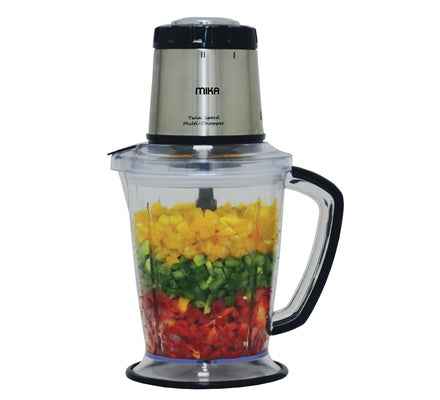
Mika appliances can cover several everyday jobs in a Kenyan home: boiling water, preparing ingredients, cooking smaller meals, reheating food, dispensing drinking water and caring for clothes. The useful starting question is not “Which Mika product is best?” It is “Which task do I repeat, and which exact model makes that task easier?” A kettle, chopper and microwave serve different purposes even when they share the same brand and colour.
This guide connects the Mika appliances range in Kenya to practical household routines. It is a buying and planning guide based on product specifications and current catalogue information, not a claim that Red Rhino has independently laboratory-tested every appliance. Features belong to exact models; do not assume that every appliance in a family has the same attachments, cooling system or controls.
Start with your household rather than a shopping list
Write down what happens on an ordinary weekday. How many people need tea before leaving home? Do you prepare vegetables each evening or cook several meals at once? Does someone take lunch to work? Are cold drinks important, or is room-temperature drinking water sufficient? The answers separate essentials from attractive extras.
For a household that cooks from scratch, preparation and hob-compatible cookware may matter more than an elaborate coffee station. For someone reheating prepared lunches, a solo microwave may solve a bigger problem than an air fryer. A family that regularly replaces heavy drinking-water bottles may value bottom loading more than a decorative finish. Purchase priorities change with the routine, not simply household size.
Keep three separate budgets: purchase cost, the tools needed to use the appliance, and ongoing care. A cooker may need suitable utensils, a drink station needs cups and cleaning space, and a blender needs an accessible place for its attachments. The complete kitchen setup guide shows how these pieces fit together.
The Mika appliance families and what they actually do
| Family | Main job | Useful buying question |
|---|---|---|
| Kettles | Heat water for drinks and permitted household uses | What volume and temperature control do I need? |
| Blenders and choppers | Change ingredient texture | Do I want a drink, chopped pieces or a specific attachment task? |
| Air fryers | Cook appropriate foods with circulated hot air | Does the basket fit my usual portions without crowding? |
| Pressure cookers | Cook suitable recipes in a controlled pressure cycle | Am I comfortable with filling, sealing and pressure release? |
| Microwave ovens | Reheat and cook suitable food; grill only on equipped models | Is reheating enough, or do I also need browning? |
| Water dispensers | Dispense water at the model's listed temperatures | Do I need normal, hot or cooled water, and how will I load bottles? |
| Garment-care appliances | Press or refresh permitted fabrics | Do I need crisp pressing, hanging refreshment or both? |
| Fans and heaters | Provide the specified form of personal or room comfort | What placement, airflow or heating format fits the room? |
These are complementary families. A blender does not automatically replace a juicer, and a microwave grill is not automatically a full baking oven. Marketing phrases such as “multi-function” are useful only when the listed functions match your needs.
Kettles and a better hot-drink routine
A larger kettle can serve more people in one boil, but you should still heat only the amount needed within its minimum and maximum limits. A smaller kettle can suit a compact workspace or one-person drink routine. Check the element design, lid opening, handle grip, base and any temperature settings rather than choosing by capacity alone.
The Mika MKT3101DB digital 1.5L double-wall kettle illustrates a temperature-control option, while the Mika MKT3103B 1L kettle illustrates a smaller format. Their differences are a reason to compare model details rather than extend one model's features to the whole brand.
Coordinate the kettle with a tray, mugs and a clear pouring area. A vacuum flask can keep a prepared drink available, while a coffee maker performs a different preparation job. Read the breakfast-station guide and the existing Philips kettle buying guide if you are comparing brands.
Food preparation: texture comes before wattage
For smoothies and liquid mixtures, start with a suitable blender. For chopped ingredients, a chopper or food processor may be more appropriate. For extracted juice, compare the juicer's feed opening, pulp handling and cleaning parts. Choose the output first, then the appliance designed to produce it.
The Mika MCH151GR multi chopper lists five preparation functions, including chopping and mincing with the appropriate attachments. That does not make it a jug blender or a spice mill. Similarly, a blender with a grinder attachment is not evidence that the main jug should be used for every dry ingredient.
Consider the finished texture of onions for a stew, ingredients for kachumbari, a fruit drink or a baking mixture. A machine can save repeated manual work, but a knife may give more control for a small amount. Our preparation-appliance comparison explains the trade-offs and connects to the broader blender guide.
Cooking: build around the meals you make
An air fryer can suit suitable foods where circulated heat and surface texture are useful. A pressure cooker can suit recipes designed for pressure cooking. A microwave is often the straightforward choice for reheating. Each has a different cooking environment, so buying all three is not automatically necessary.
The Mika MAFDW2105 5L digital air fryer is one capacity example. Litres alone do not tell you how many portions of every food will fit: basket footprint, food shape and spacing matter. A pile of potatoes and flat pieces of chicken need different arrangements. See the existing air-fryer size and capacity guide before selecting a basket.
For pressure cooking, the Mika MPC1106 6L pressure cooker provides an exact model to investigate. Six litres is the vessel rating, not permission to fill it completely with any recipe. Compare the pressure-cooker and rice-cooker guide for filling limits, meal planning and total cycle time.
For suitable baking mixtures, compare the hand-mixer and stand-mixer guide. For cookware-based cooking, the tabletop gas and induction guide connects burner or zone choices with the pans and kitchen setup they require.
Microwave ovens: distinguish controls from cooking functions
Manual and digital describe controls. Solo and grill describe different function sets. A digital solo microwave does not gain a grill merely because it has automatic menus. A grill-equipped model should be used according to its mode-specific instructions, especially where accessories and containers are concerned.
The Mika MMWDSPH2052B digital solo microwave is a useful starting point for reheating-focused comparisons. Measure your plate and the available kitchen space, then check the exact appliance's dimensions and required ventilation. The microwave buying guide explains why cavity litres, turntable size and cooking wattage answer different questions.
Water dispensers: loading and cooling are separate decisions
Some dispensers provide hot and normal water; others provide cooled water using the listed cooling system. Normal water means room-temperature water, not necessarily chilled water. A bottom-load design changes how you install the bottle; it does not by itself specify how cold the water becomes.
Compare the Mika MWDB2804BS bottom-load compressor-cooling dispenser with the Mika MWDB2351BS bottom-load electric-cooling dispenser using their exact temperature options and cooling descriptions. Do not infer recovery speed or power consumption without published measurements. The water-dispenser guide covers these distinctions and office-use questions.
Beyond the kitchen: connect comfort and garment care
A complete household setup can include more than cooking. A fan helps create airflow, while a heater supplies warmth; neither should be selected only to match kitchen appliances. Room layout, positioning and permitted use matter. Use the existing fan buying guide and room-heater guide to compare formats.
For clothes, an iron can create a pressed finish on suitable fabrics, while a garment steamer can refresh permitted hanging garments. They overlap in some routines but are not identical tools. Connect the appliance to a stable work area and suitable garment storage. The garment-steamer guide and steam-iron comparison help you choose the format.
Compare Mika with other brands fairly
Compare exact models serving the same job, within a realistic budget and with similar useful capacity. A low-cost everyday blender and a higher-powered glass blender may target different workloads. A basic kettle and a digital temperature-control kettle may appeal to different drink routines.
Our Mika, Philips, Beko and Sanford comparison uses a model-based approach. It avoids a blanket “best brand” claim because feature fit, cleaning, controls, parts and support are all relevant. The specifications and benchmarking guide provides a reusable comparison worksheet.
Ownership costs, care and availability
Watts describe power, not the final electricity bill. A high-powered appliance used briefly can consume less energy than a lower-powered appliance left running for a long time. Use the electricity-cost guide for transparent calculations rather than assumed savings.
Keep the manual and exact model code, use permitted attachments and clean according to the manufacturer's instructions. The appliance-care guide connects cleaning, storage and replacement-part decisions across families. Check current product availability before ordering: a dated article or supplier offer does not guarantee ongoing stock or a permanent price.
Three household plans to adapt
One-person kitchen or first-home setup
Start with the frequent task already causing friction. A compact kettle can serve hot drinks, while a suitable microwave can serve a reheating routine. Add a preparation appliance when the ingredients and quantities make its assembly and cleaning worthwhile. Keep enough budget for cookware, a board, utensils and containers.
Review actual use before expanding. A specialised appliance can be enjoyable, but it should have suitable storage and a repeated purpose. An uncluttered work area makes the few selected appliances more convenient to use. This is a staged plan, not a fixed bundle or a claim that every first home needs identical equipment.
Shared family kitchen
List the jobs that happen simultaneously. Someone preparing vegetables, someone making tea and someone serving food should not need the same narrow patch of counter. Larger useful batches can help, but compare the complete session and the handling of hot equipment rather than choosing every largest-capacity model.
Coordinate meal preparation with storage and serving. A chopper can prepare a base before cooking begins, a suitable cooker can handle one dish, and another appliance can serve a separate task where justified. Give each removable part a cleaning and drying route. The family setup works best when all users know the appropriate modes and containers.
Home office or shared drink point
A workday setup may prioritise drinking-water access, hot drinks and straightforward lunch reheating. Check the busy period and who maintains the equipment. A dispenser's cabinet, cooling system and loading method should be selected separately; a coffee maker's cup measure should be checked against actual mugs.
Keep cups, supplies and care records organised without blocking ventilation or access. Do not assume a household appliance has unlimited commercial capacity. Confirm the model's intended use and relevant output before choosing it for sustained shared demand.
A buying checklist you can reuse
- Write the task and expected quantity before choosing the model.
- Identify confirmed functions, useful working capacity and any unknown information.
- Measure closed dimensions and the operating area separately.
- Check the current offer, included accessories and applicable service terms.
- Plan cleaning, replacement-part identification and storage.
- Compare alternatives using the same task rather than a whole-brand ranking.
Keep this checklist with the exact model code. It makes a shop conversation more productive because the requirement is specific: a certain drink routine, meal quantity or preparation texture. It also prevents an attractive extra feature from displacing a practical need such as handling, working space or regular cleaning.
Mika appliance FAQs for Kenyan shoppers
Should I choose every appliance from Mika?
You can, but you do not need to. Choose each appliance for its task and model-specific features. Mixing brands can be sensible when one model better fits your cookware, counter space, control preferences or care routine.
Are more watts always better?
No. Wattage alone does not establish blending texture, cooking evenness, reliability or electricity cost. Compare the complete design and permitted workload, then evaluate useful results rather than the largest number.
Can one multi-function appliance replace an entire kitchen?
Only the functions explicitly provided can be counted. Consider attachment changes, cleaning and whether tasks need to happen simultaneously. A combined appliance may save space while separate appliances may offer a more convenient workflow.
How do I check whether a Mika model is available?
Use the exact code on the current product listing and the official manufacturer's page where available. If an older code or variant cannot be verified, ask for confirmation rather than assuming a similar-looking model is identical.
What should I buy first for a new home?
Start with the tasks you do daily, then add specialised appliances when a repeated need appears. A hot-water routine, practical cooking tools and food storage often deserve attention before optional equipment. Your own meal pattern should decide the order.
Sources and how to use this guide
Model details are linked to the relevant Red Rhino product pages and the official Mika website. Manufacturer specifications describe intended features, not independent comparative test results. This guide was prepared on 1 October 2026; prices, stock, accessory bundles and published specifications can change. Always check the exact listing and supplied manual before purchase or use.


