

Cart
0
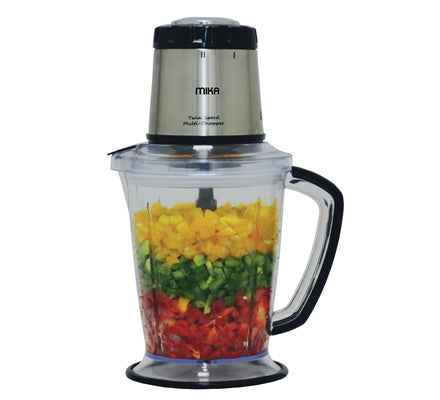
A blender, juicer, chopper and food processor change ingredients in different ways. To choose well, describe the result you want: a liquid mixture, extracted juice, chopped pieces, slices or a task performed by a particular attachment. “More functions” helps only when those functions match your cooking routine.
This guide connects food-preparation appliances with everyday Kenyan kitchen tasks. It explains why a smoothie, a chopped stew base and a juice are different outputs, and why wattage alone cannot tell you which machine to buy.
Start with the finished texture
If you want a blended fruit mixture, investigate a suitable blender and its permitted ingredients. If you want juice separated from pulp, investigate the appropriate juicer type. If you want chopped vegetables or meat processing, investigate a chopper or processor with that exact task listed.
The preparation method changes the result. A chopped onion mixture can retain pieces, while a blended sauce can have a more uniform texture. A juicer handles the ingredient according to its extraction design, while a blender mixes what is placed in its jug. Neither result is automatically better; it depends on the recipe.
Use the existing blender buying guide for the blender shortlist, then return here to decide whether you actually need another family instead.
Compare the four main formats
| Appliance | Main output | Key question |
|---|---|---|
| Jug blender | Blended mixtures and permitted liquid preparation | Is the intended recipe within the jug and motor instructions? |
| Juicer | Extracted juice with design-specific pulp handling | What ingredients, feed opening and cleaning steps are permitted? |
| Chopper | Chopped or otherwise processed ingredients using listed attachments | Does the texture and working quantity suit my meals? |
| Food processor | Bowl preparation using the supplied blades or tools | Which attachments and tasks are actually included? |
Hand blenders and stand mixers are additional formats. A hand blender operates in permitted vessels and recipes; a mixer performs its specified mixing or dough tasks. Do not count these functions unless they are included for the exact product.
Blender: choose for ingredients and routine
A jug blender can suit permitted fruit drinks, sauces and liquid mixtures. Check the ingredient instructions, working fill, speed controls and maximum running sequence. The headline jar capacity is not a universal maximum for every recipe.
Consider the ingredients you use most often. Soft prepared fruit, frozen ingredients, dense mixtures and dry ingredients can require different permissions. A motor's wattage does not authorise tasks absent from the manual. If a grinder or mill is supplied, it may be the appropriate attachment for certain permitted ingredients rather than the main jug.
The Mika MBLR304B blender listing and Philips HR2041/10 blender provide exact models for comparison. Use the cross-brand guide to compare equivalent tasks rather than assume one motor number establishes the winner.
Juicer: account for preparation and cleaning
When investigating a juicer, check the exact permitted ingredients, feed opening, pulp container and removable parts. A wider opening may change ingredient preparation, but it does not remove the need for the supplied safety and ingredient instructions.
Compare the entire session: washing and preparing produce, processing, serving, emptying pulp and cleaning. A machine that produces the desired drink can still be inconvenient if its cleaning routine does not suit your mornings. Assess how often you will use it rather than choosing by an occasional ideal recipe.
Browse juicers in Kenya by exact model. Do not assume a slow-juicer label proves a universal nutritional or quality advantage over all alternatives. Such claims need specific evidence, and different consumers may prefer different textures and preparation methods.
Chopper: control pieces and preparation batches
A chopper can help with repeated ingredient processing. It may be useful where a recipe calls for chopped rather than blended ingredients. Follow the appropriate quantities and operating method, checking the developing texture instead of assuming every ingredient should be processed for the same duration.
The Mika MCH151GR multi chopper lists chopping, mincing, garlic peeling, whipping and kneading with the appropriate attachments. These listed functions do not establish jug blending or spice milling. That distinction matters when comparing it with a blender sold with a separate grinder.
For a small quantity, a suitable knife may remain the faster overall choice because there is less assembly and washing. Connect appliance preparation with the existing kitchen knife guide rather than treating manual tools as obsolete.
Food processor: examine each attachment
A food processor's value depends on the supplied tools and the jobs they perform. A bowl, blade, disc or blender attachment can change the available tasks. Product families and similar names should not be treated as identical accessory sets.
The Philips HR7320/11 food processor listing and Tornado FP-1000SG food processor listing offer models to investigate. Record the exact included attachments and permitted uses before comparing prices.
Ask whether changing attachments between jobs will be convenient. If two tasks occur at the same time, separate appliances may support the workflow better. If space is limited and tasks happen one after another, a well-chosen combined format may be useful. Neither arrangement is universally superior.
Wattage, working capacity and performance claims
Power is one part of the specification. Blade design, bowl shape, controls, recipe proportions and permitted workload also affect practical results. Two machines with the same wattage can produce different experiences, while a higher wattage is not a measured guarantee of smoother output or longer life.
Compare the same ingredient preparation, quantity and intended texture if you assess results. Keep assembly and cleanup in the comparison. A five-minute blending task and a whole preparation session answer different questions.
The benchmarking guide separates specifications, observations and actual test evidence. The electricity guide explains why wattage alone also cannot state the final cost of a short processing job.
Build a preparation system around meals
For a breakfast drink routine, a blender may connect naturally with a kettle, cups and suitable storage. For meals cooked from scratch, a board, knife, bowls and chopper may matter more. For regular baking, a mixer may serve a distinct task instead of replacing the preparation tools.
The breakfast-station guide and complete kitchen guide help place the appliance in its full routine. The small-kitchen guide helps decide which items deserve permanent counter space.
Buy the machine that removes a repeated problem. If you cannot identify the food, quantity and expected output, postpone the specialised purchase until the need is clearer. That is often a better use of a household budget than buying several overlapping devices at once.
Care, storage and do's and don'ts
- Do unplug before handling blades or changing attachments.
- Do follow the exact running-time, load and ingredient limits.
- Do use the supplied feed tools where prescribed.
- Do clean food-contact parts using their approved method.
- Do allow parts to dry before suitable storage.
- Don't use fingers to push food toward moving tools.
- Don't process hot mixtures unless the exact model expressly permits the task.
- Don't assume every removable part is dishwasher-safe.
- Don't interchange blades, couplings or bowls without confirmed compatibility.
The care and maintenance guide explains how to keep model codes and attachment sets organised so the correct part is used later.
Preparation-appliance FAQs
Can a blender replace a juicer?
It can make permitted blended drinks, but that is not the same output as juice extraction. Choose according to the texture and preparation method you want rather than treating the two names as interchangeable.
Can a chopper replace a blender?
Only for overlapping tasks explicitly supported by both models. A chopping bowl is not automatically designed for the liquid recipes or dry milling tasks of another appliance.
Is a food processor better value than several appliances?
It can be if the supplied attachments cover your repeated tasks and changes and cleaning are convenient. Separate appliances can be more practical where tasks need to happen simultaneously.
What matters more than watts?
The permitted ingredients, working capacity, controls, attachment roles and actual output for your recipe matter together. Wattage is informative but cannot independently establish performance.
Should I buy a preparation machine for occasional cooking?
Compare the time saved with assembly, washing and storage. For small or infrequent jobs, a suitable manual tool may be enough. Repeated quantities can make an appliance more useful.
Continue your shortlist
Explore blenders, choppers and food-preparation appliances. Model features should be checked against current listings and the supplied manual, including the official Mika catalogue where relevant. Prepared on 1 October 2026; comparisons here are task-based buying analysis rather than independent performance scores.


