

Cart
0
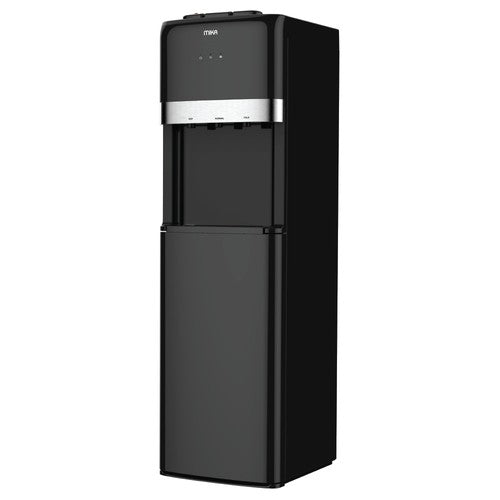
A water dispenser should be chosen by the temperatures you need, how bottles are loaded, the cooling system and the space where people will use it. A model that suits a quiet household may not suit a shared office where several people fill cups at once. Appearance matters, but it does not tell you the cooling method or whether the machine has a refrigerated compartment.
Start with the current water dispensers collection, then compare exact model codes. This guide explains the buying questions behind hot, normal and cold water, top and bottom loading, electric and compressor cooling, storage cabinets and added features.
Separate four decisions before comparing prices
Temperatures
Normal water means water at the dispenser's unheated, unchilled temperature. It should not be described as refrigerated water. A hot-and-normal model therefore serves a different requirement from a model offering hot, normal and cold water.
Bottle loading
Top loading and bottom loading describe where you install the bottle. A bottom-load format can reduce the height you lift it to, but you still need to move the bottle into place and connect it as instructed. Loading method does not establish cooling performance.
Cooling system
Use the manufacturer's exact description. Mika distinguishes models listed with electric cooling from models listed with compressor cooling. Compare any published cooling output, temperature range and recovery information if available; do not invent a universal performance figure for either category.
Placement
A tabletop dispenser needs a suitable supporting surface and room for the bottle and required clearance. A floor-standing dispenser uses floor space and needs access for loading and cleaning. Neither should be placed in a tight enclosure unless its instructions allow that arrangement.
Compare the main formats
| Format | Suitable buying priority | What to check |
|---|---|---|
| Portable normal-water dispenser | Simple dispensing without heating or cooling | Bottle connection, charging or power arrangement where applicable |
| Hot and normal tabletop model | Compact hot-water and room-temperature access | Supporting surface, bottle height, heating controls |
| Hot and normal floor-standing model | Shared use with an integrated standing body | Loading, drip tray and whether lower space is storage only |
| Electric-cooling model | Cooled water with the manufacturer's listed system | Actual temperature modes and any published cooling capability |
| Compressor-cooling model | A model specifically providing compressor cooling | Recovery information, ventilation and placement instructions |
| Bottom-load model | Lower bottle-installation height | Bottle compatibility, pump connection and access |
| Model with ice maker or refrigerator | A specific extra household or office task | Exact included function, capacity, care and separate limitations |
Do not use this table as a ranking from worst to best. The appropriate format depends on the job and the exact specification.
Mika examples: normal, hot and cooled water
The Mika MWD1102BS portable normal-water dispenser illustrates a simple dispensing format. The Mika MWD1205B tabletop hot-and-normal dispenser serves a different hot-water requirement. If you only want room-temperature water, a heater and cooling system may be unnecessary additions.
For a three-temperature bottom-load comparison, investigate the Mika MWDB2351BS electric-cooling dispenser and Mika MWDB2804BS compressor-cooling dispenser. The shared bottom-load design does not make their cooling systems identical. Read their exact listings and supplied instructions before deciding.
In the Mika household guide, water dispensing connects with drink preparation and everyday kitchen planning. A dispenser is one part of a drink routine, not automatically a replacement for a kettle, coffee maker or refrigerator.
Top loading versus bottom loading
With top loading, consider the full bottle's weight, the height of the installation and whether the person replacing it can comfortably manage the task. Keep the installation area clear so the bottle can be moved without reaching over other equipment.
With bottom loading, consider how the bottle enters the compartment, how the pickup connection is fitted and whether the access door can open fully. Confirm bottle compatibility with the exact model. Do not assume every water container fits because it has roughly the same volume.
The useful question is “Who replaces bottles, and where does that happen?” A model can be convenient during dispensing yet awkward during replacement. Plan both routines before choosing. Store spare bottles in a suitable location without blocking the appliance's ventilation or access.
A cabinet is not necessarily a refrigerator
The lower compartment shown in a photograph may be storage rather than refrigeration. The product description must explicitly state the function. If you want chilled food or drinks in a separate compartment, compare the exact refrigeration specification and its intended use.
The Mika MWD2702SGR listing identifies a refrigerator feature, while other models describe cabinets. Those words should not be treated as interchangeable. Check capacity, cleaning and permitted contents before using the compartment.
An ice-maker model adds another function and another cleaning routine. The Mika MWDB3002BS bottom-load dispenser with ice maker is an exact model to investigate if ice is a repeated requirement. Verify its published output and operating conditions rather than assuming it can serve any event continuously.
Choosing for an office or shared workspace
Count the likely demand during a short busy period, not only the total number of staff. Ten people making drinks at once creates a different requirement from ten people dispensing water throughout a day. Consider cup clearance, drip handling and bottle-replacement responsibility.
Ask for comparable published hot-water and cooling output where available. If output data is absent, ask for confirmation before relying on the dispenser for demanding shared use. Do not infer continuous commercial capability from a floor-standing appearance.
Set a simple cleaning and bottle-change routine with named responsibility. Keep instructions accessible and ensure users understand which tap supplies hot water. A shared water point works well when care and use are organised, not just when the appliance looks tidy.
Space, access and drink-station planning
Measure the chosen area, including the bottle, loading access, cup space and required clearance. Keep the dispenser accessible to the people using it and away from placement prohibited by the manual. Think about where a drip tray can be removed without spilling over another appliance.
If the water point sits near a kettle or coffee maker, avoid crowding several hot-water tasks into a small corner. The breakfast-station guide explains how pouring, cup storage and appliance access fit together. For a new household, the complete kitchen guide helps allocate the space.
Electricity and ownership costs
Heating, cooling and standby behaviour affect electricity consumption. A single nameplate number is not enough to calculate a precise daily cost for a thermostatically controlled dispenser. Use manufacturer consumption data or an appropriate measured-use record where available.
Our electricity-cost guide explains watts, running time and kWh. Keep purchase cost, water supply, care and electricity separate when budgeting. A dispenser's price does not include every ongoing part of a household water routine.
Check warranty and service terms for the exact model and retain the purchase documents. Pumps, reservoirs and cooling components should be handled according to the manual and appropriate service guidance. A model number is more useful for support than “the black dispenser”.
Cleaning, first use and practical do's and don'ts
Follow the exact manual for cleaning, initial filling and activation. The sequence matters: heating or cooling equipment should not be switched on in a condition the manufacturer prohibits. Use only the approved cleaning process and rinse as instructed.
- Do clean and dry removable drip components as directed.
- Do use the model's prescribed reservoir and water-path care procedure.
- Do check bottle seals, connections and compatibility before use.
- Do keep the ventilation and loading area accessible.
- Do retain the model code and manual for support.
- Don't assume heating or cooling purifies unsuitable source water.
- Don't describe normal water as chilled water.
- Don't put unapproved liquids or cleaning chemicals into the water path.
- Don't open electrical or refrigeration components to investigate a fault.
The appliance-care guide helps organise records and maintenance alongside other household appliances.
Water-dispenser FAQs
Is bottom loading better than top loading?
It may be more convenient where a lower installation height helps. Compare bottle compatibility, access and the user's replacement routine. It is a loading decision, not proof of better cooling.
What is the difference between normal and cold water?
Normal water is not deliberately chilled by the dispenser. Cold or cooled water uses the model's specified cooling system. Check the exact temperature modes rather than relying on the number of taps alone.
Is a compressor dispenser always the right office choice?
Not automatically. Demand, published recovery capability, placement and care matter. Choose using comparable exact-model information and confirm suitability for the intended workload.
Can a dispenser replace a water purifier?
Do not assume so. Dispensing, heating and cooling do not establish filtration or purification. Only count treatment functions explicitly stated for the exact model and use suitable source water.
Does the cabinet keep drinks cold?
Only if the exact product states that it is refrigerated. A storage cabinet and a refrigerator compartment are different functions.
Where should I check current Mika availability?
Check the linked current store listing and the official Mika website using the exact code. Older codes and similar-looking variants need confirmation rather than guesswork.
Choosing your model
Return to water dispensers with four decisions written down: temperatures, loading, cooling system and space. Compare exact models and leave unpublished information marked as unknown. This guide was prepared on 1 October 2026; stock, offers and product details can change.


