

Cart
0
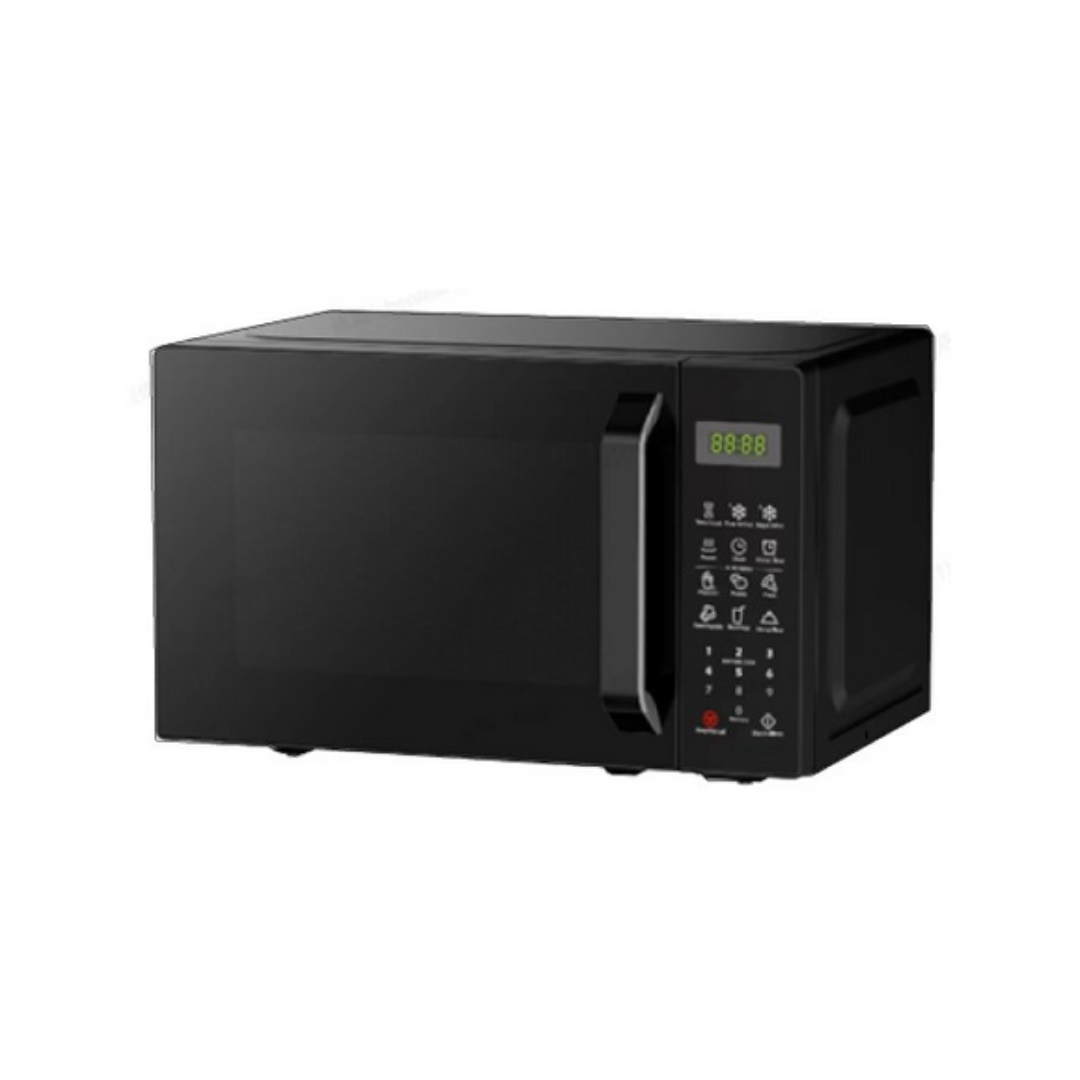
Choose a microwave oven in Kenya by its cooking functions, the food and containers you use, the controls you prefer and the space available. “Digital”, “solo”, “grill”, “20L” and “25L” answer different questions. A larger number or longer feature list does not automatically identify the most useful model for your kitchen.
Browse microwave ovens in Kenya with your main task in mind: reheating meals, warming suitable drinks, defrosting according to instructions or using a listed grill function. This guide connects those tasks with capacity, power, containers and care.
Solo, grill and convection are different functions
Solo microwave
A solo model uses microwave cooking and is often appropriate for suitable reheating and defrosting tasks. Automatic menus can simplify control, but they do not turn a solo model into a grill or convection oven. Read the exact function list.
Microwave with grill
A grill-equipped model adds a browning or grilling function as specified by its manufacturer. It may provide separate and combination modes. The permitted containers and supplied accessories can differ by mode, so mode selection is part of safe use.
Convection-capable model
Only count convection where it is explicitly listed for the exact appliance. A grill, digital display or “combi” label alone is not enough to establish a convection baking function. If baking is a priority, verify temperature controls, mode guidance and accessory requirements before purchase.
| Question | Specification to check | Common mistake |
|---|---|---|
| I mainly reheat lunch | Microwave functions and practical container fit | Buying extra functions without a repeated use |
| I want a browned surface | A listed grill or other suitable browning mode | Assuming microwave-only heat behaves like a grill |
| I want oven-style baking | Explicit convection capability and instructions | Treating every combination model as a full oven |
| I prefer simple controls | Manual or digital control layout | Treating digital controls as a cooking function |
Manual versus digital controls
Manual controls can be convenient for simple repeated tasks. Digital controls can provide more precise time entry, displays and model-specific programmes. Neither format is automatically easier for every user. Look at the actual controls and consider who will operate the appliance.
For a shared kitchen, clear mode selection and readable timing may matter. For occasional reheating, a simple layout may be enough. Compare how to cancel a cycle, change power and select a mode rather than judging the front panel solely by appearance.
The Mika MMWDSPH2052B digital solo microwave illustrates a digital solo format, while the Mika MMWMSKH2012B manual solo microwave illustrates a different control approach. Use their current listings for exact specifications.
Capacity: measure the dish you use
The cavity's litre rating does not guarantee that your largest plate or tall container fits. Turntable diameter, internal dimensions and door opening can be more informative for your particular dishes. Check that a permitted container can rotate freely where the design requires rotation.
Measure the widest plate or container you expect to use regularly. Consider handle projections, lids and the clearance needed to remove it safely. A deep vessel and a wide flat plate create different fit problems even if both contain the same amount of food.
Compare the external dimensions separately from the cavity. A larger internal volume can require more worktop space, but the exact relationship varies by model. Use the small-kitchen planning guide to check the practical footprint, door movement and ventilation.
Cooking power and electrical input are not the same
Microwave output power relates to the energy used for microwave cooking. Electrical input power describes the appliance's supply requirement. Grill power may be another listed figure. Do not compare these numbers as if they all describe the same property.
Use the cooking power and manufacturer's guidance when adapting a reheating instruction. The input rating is relevant to electrical suitability and energy calculations, but it does not directly state cooking output. If a listing does not clearly distinguish the figures, ask for clarification rather than guessing.
The specification-reading guide explains these distinctions across families. The electricity-cost guide shows why a high input number alone cannot determine the cost of reheating one meal.
Reheating meals: think about quantity and arrangement
A small portion and a large bowl of dense food may need different handling. Follow suitable food instructions and the appliance manual, including stirring, standing time and container requirements where stated. A programme name does not eliminate the need to check the result.
Avoid treating a single fixed time as correct for all rice, stews, soups or packed lunches. Initial food temperature, portion size, density and container shape vary. Use the manufacturer's directions and appropriate food guidance rather than copying a universal time from a product comparison.
Plan reheating alongside storage and serving. A suitable container can simplify the route from storage to reheating, but its body and lid may have different permissions. The complete kitchen guide connects appliances with cookware and containers.
Microwave versus air fryer: different results
A microwave is often useful when you want to reheat suitable foods. An air fryer circulates hot air around suitable food and can suit a surface-texture goal. The two appliances use different methods and are not interchangeable for every meal.
If your priority is everyday reheating of prepared dishes, investigate the microwave first. If your priority is a particular cooked surface or smaller hot-air cooking session, compare an air fryer. You may need both for distinct frequent tasks, but buying both should have a clear purpose.
The existing air-fryer buying guide explains basket size and batches. Connect that comparison with the pressure-cooker guide when planning the full meal rather than one appliance in isolation.
Containers and mode-specific accessories
Use only containers suitable for the chosen cooking mode and permitted by the appliance's instructions. Microwave suitability does not automatically establish grill or oven suitability. A lid may have a lower temperature limit than the container beneath it.
Do not introduce unapproved metal, decorative trim or accessories into microwave operation. Some grill-equipped appliances supply specific accessories with mode restrictions; those must be used exactly as directed. Their presence is not permission to use arbitrary metal items.
Check food packaging instructions before heating. Do not heat sealed containers or use unsuitable items. If you are uncertain about a container, use a clearly suitable alternative rather than testing it with food. Keep the supplied guide where users can check it.
Placement and household use
Follow the required clearances and supporting-surface instructions for the exact model. A countertop microwave should not be treated as a built-in appliance unless its manufacturer explicitly permits the installation. A tight decorative cabinet can obstruct access and ventilation.
Check door opening against adjacent walls and appliances. Allow a clear place for a hot container when it comes out. In a shared household, discuss which containers belong with which mode so convenience does not rely on one person's memory.
The Mika household guide links microwave use with the other appliance families. For cross-brand planning, the model-based comparison guide explains how to keep different function sets separate.
Cleaning and faults: what to do and avoid
Clean spills as directed after the appliance is safe to handle. Keep the turntable and removable components clean using the specified method. Residue affects day-to-day use, and regular care is easier than repeatedly ignoring spills.
Inspect the door and visible condition without dismantling the appliance. If there is damage, repeated sparking, an unusual burning smell or a serious fault, stop using it and seek appropriate service. Microwave components are not a suitable do-it-yourself electrical repair project.
- Do record the exact model, selected mode and symptoms when asking for help.
- Do check the manual for permitted cleaning products and removable parts.
- Do keep the required ventilation unobstructed.
- Don't force the door or bypass a safety interlock.
- Don't use damaged doors or seals as though the appliance is unaffected.
- Don't open the casing or attempt internal electrical repairs.
The household appliance-care guide provides a useful record-keeping approach.
Microwave FAQs for Kenyan kitchens
Is a 25L microwave better than a 20L microwave?
It may offer more cavity volume, but your regular container fit, cooking functions, external size and controls matter. Compare exact dimensions and the dishes you use rather than litres alone.
Does a digital microwave bake cakes?
Digital describes the controls, not a guaranteed baking function. Check the exact cooking modes and permitted recipes. Convection capability must be explicitly specified if that is the feature you need.
What is the difference between solo and grill?
A solo microwave provides its listed microwave functions. A grill-equipped model adds a specified grill function, often with separate mode instructions and accessory requirements.
Can I put an ordinary metal rack inside?
Do not do so. Only use accessories explicitly permitted by the manufacturer, in the prescribed modes. A supplied grill rack does not authorise unrelated metal items during microwave operation.
Is a microwave or air fryer the first purchase?
Choose by your frequent task. Reheating and hot-air cooking are different needs. Compare the full session, container requirements and cleaning rather than assuming one appliance always replaces the other.
Before ordering
Shortlist exact models from the microwave collection, measure your regular dishes and confirm the cooking functions, electrical input and required placement. Use the official Mika website and the supplied manual for model guidance. Prepared on 1 October 2026; check current stock and price on the linked listing.


