

Cart
0
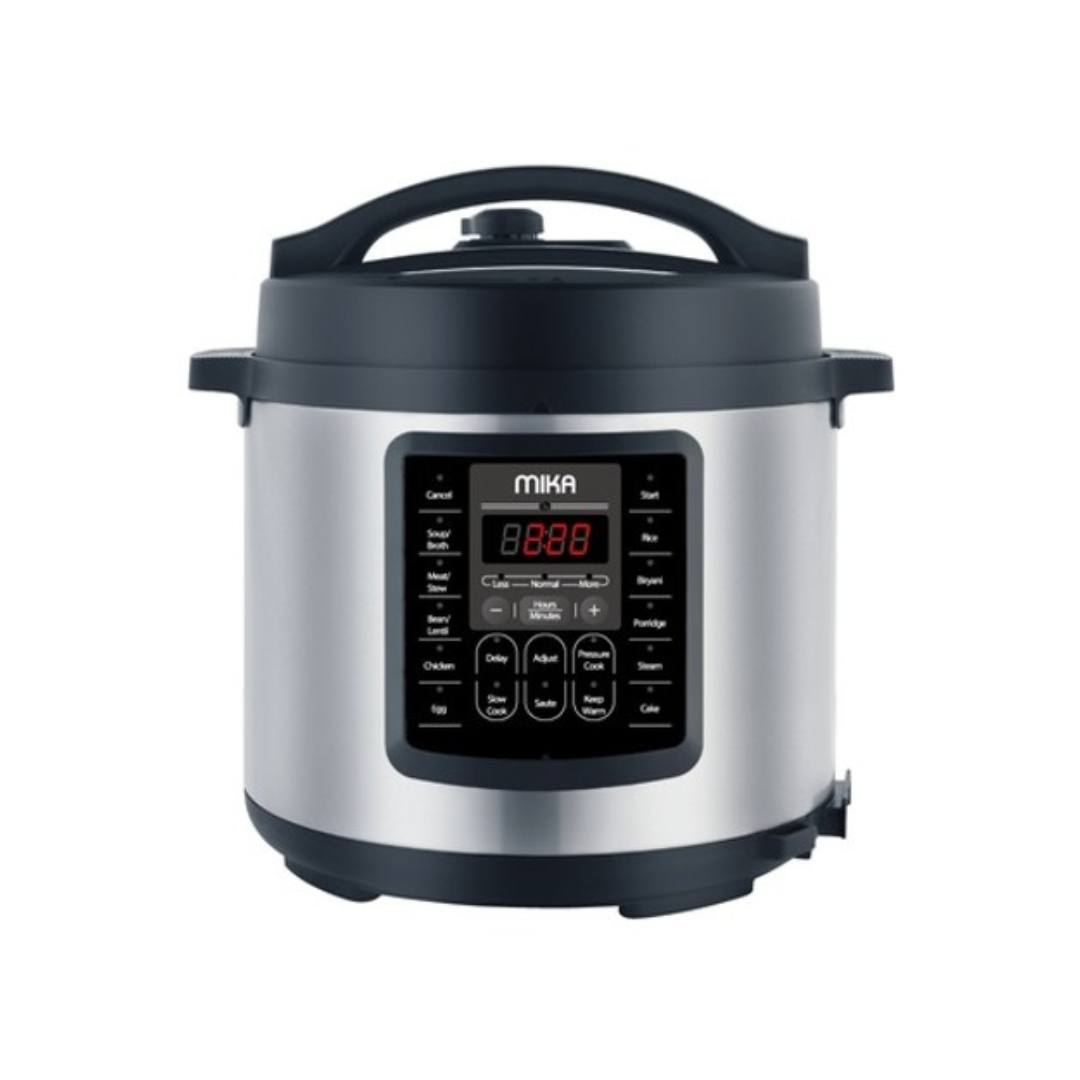
An electric pressure cooker and a rice cooker can both belong in a Kenyan kitchen, but they are not the same appliance. The right choice depends on the meals you make, the cooking methods you want and how comfortable you are with the full operating sequence. A programme labelled “rice” does not make every cooker identical, and a larger pot does not automatically suit every household.
Start with your repeated meals and the equipment you already own. If rice is the main task, investigate a dedicated rice cooker. If suitable pressure-cooking recipes are a frequent priority, investigate an electric pressure cooker. This guide compares purpose, usable capacity, total time, cleaning and everyday ownership.
What each appliance is designed to do
Rice cooker
A rice cooker is designed around its listed rice-cooking functions. Some models add steaming, programmes or other modes; those are exact-model features, not a universal promise. The supplied rice measure and liquid instructions matter because a household mug is not necessarily the same measure.
Electric pressure cooker
An electric pressure cooker uses a sealed pressure-cooking cycle for permitted recipes. Depending on the model, additional cooking modes may be provided. Sealing, minimum liquid, filling limits and pressure release are part of the process, not optional details after selecting a timer.
Multi-cooker
“Multi-cooker” is a broad description. Read the actual modes before assuming pressure cooking, slow cooking, rice cooking or frying is included. The function list and manual should establish the appliance's permitted tasks.
| Buying priority | Format to investigate | Important check |
|---|---|---|
| Repeated rice preparation | Dedicated rice cooker | Rice measure, yield, controls and cleaning |
| Suitable beans, stews or pressure recipes | Electric pressure cooker | Recipe permissions, fill limits, sealing and release |
| Several distinct cooking modes | Exact multi-function model | Which modes are actually included |
| Hands-off meal planning | Either, depending on the recipe | Complete cycle and permitted supervision |
Model examples from the current catalogue
The Mika MPC1106 6L pressure cooker is an exact model to assess for pressure-cooking routines. For rice-focused comparisons, browse the rice cookers collection and consider models such as the Philips HD3008/30 rice cooker or Sanford SF1160RC rice cooker.
These examples identify different formats and listed capacities, not measured winners. Check the exact supplied accessories and instructions. A current catalogue title is useful for the shortlist, while the manual establishes how the selected appliance should be used.
Connect this choice with the Mika household guide and cross-brand comparison if you are planning several appliance purchases.
Capacity: vessel volume is not a filling instruction
Pressure-cooker filling limits depend on the recipe and ingredients. Foods that expand or foam can have stricter limits. Never treat the headline pot volume as permission to fill the vessel to the top. Use the markings and instructions supplied for the exact cooker.
Rice-cooker capacity can also be described in different ways. Compare uncooked rice measures, cooked yield and the manufacturer's serving guidance where provided. Do not compare a litre figure with a cup rating without understanding what each describes.
For a household that prepares work lunches, batch size may be more important than a single dinner portion. For someone cooking one serving at a time, a large vessel may be unnecessary. The capacity and specification guide explains how to keep the comparison consistent.
Total cooking time includes more than the timer
A pressure-cooking session can include ingredient preparation, heating to pressure, the programmed cooking stage, pressure release and serving. A timer that starts after pressure builds does not describe the entire session. Release time also depends on the permitted method and recipe.
For a rice cooker, consider preparation, cooking, any instructed standing period and serving. If the appliance has a keep-warm mode, use it according to the manufacturer and appropriate food guidance rather than treating it as unlimited storage.
When comparing with a stovetop routine, compare the same recipe and portion from beginning to ready-to-serve. Avoid claims such as “always faster” without measuring equivalent sessions. Our energy-cost guide uses the same principle for electricity comparisons.
Match the choice to familiar meal routines
For households that frequently cook rice as part of a meal, a rice cooker can reserve the main cooking area for other dishes. Consider whether you need a simple cook-and-warm routine or additional programmes that you will actually use.
For suitable bean, stew or meat recipes, an electric pressure cooker can provide a different cooking workflow. Follow model-specific recipe guidance, especially where ingredients expand, foam or require a particular release method. Do not transfer a conventional cooking recipe without adjusting according to reliable cooker instructions.
For a mixed meal, think about what happens at the same time. A cooker may prepare one dish while cookware or an air fryer handles another suitable component. The complete kitchen guide helps plan this sequence. The existing air-fryer guide explains when basket cooking serves a separate purpose.
Controls, settings and practical handling
Check whether the controls are readable and whether the selected function is clear. Programmes can simplify a repeated routine, but they do not replace correct ingredient quantities, assembly or filling. A familiar programme name can cover different instructions on different models.
Look at the lid, removable pot, handles and accessories. Consider where a hot lid or pot will go after cooking, and whether there is enough clearance to operate the appliance without reaching across other equipment. The closed footprint is not the entire working area.
For a small kitchen, use the space-planning guide to account for opening, steam release, utensils and cleaning. An appliance becomes easier to use when its whole routine fits the room.
Safety and the manual: essential pressure-cooker rules
Read the supplied manual before first use. Check the permitted sealing arrangement, valve position, minimum liquid, fill limits and pressure-release procedure. These can vary by model and recipe. Keep hands and face away from the prescribed steam-release path.
Never force open a pressure cooker. Do not bypass its locking or pressure-control features. If there is a fault, unexpected leakage or uncertainty about whether pressure remains, follow the manufacturer's fault guidance and seek appropriate service rather than improvising.
The Philips HD2237 user manual illustrates why pressure-cooker instructions treat opening and assembly as safety-critical. It is not a substitute for the Mika or other manual supplied with your exact model.
Cleaning and replacement parts
Clean the removable pot and permitted lid components according to the manual. Check seals and valves as instructed, without probing or altering safety mechanisms. Keep the exterior and electrical base dry using the specified method.
A replacement seal, inner pot or valve must be appropriate for the exact model. Similar appearance is not proof of compatibility. Keep the full code and purchase record so service staff can identify the correct part.
The appliance-care guide explains how to organise maintenance records across the kitchen. Cleaning and storage are part of ownership value, particularly for appliances used several times each week.
Do's and don'ts when deciding
- Do compare the meals you cook regularly rather than every advertised mode.
- Do compare useful working quantities, not just vessel litres.
- Do account for heating and release when comparing cooking time.
- Do confirm included accessories and correct replacement parts.
- Do read the model-specific filling and opening instructions.
- Don't force a pressurised lid or alter a safety mechanism.
- Don't transfer fill limits between different cooker models.
- Don't assume keep-warm is permission for indefinite food storage.
- Don't count a function that the exact product does not list.
Pressure-cooker and rice-cooker FAQs
Can an electric pressure cooker cook rice?
Some models provide a rice function or permitted rice recipes. Check the exact cooker and instructions. That does not make its workflow identical to a dedicated rice cooker.
Which one should I buy first?
Choose a rice cooker if rice preparation is the repeated job you want to simplify. Choose a pressure cooker if suitable pressure recipes are a frequent priority and you are comfortable with its operating and care requirements.
Does a 6L pressure cooker hold 6L of any recipe?
No. The vessel rating is not a universal working fill. Follow the exact manual and ingredient-specific limits, particularly for expanding or foaming foods.
Are automatic programmes enough to ensure good results?
No. Correct assembly, quantities, liquid, ingredients and release still matter. Programmes simplify settings; they do not remove the need for the instructions.
Can I compare electricity use from watts alone?
No. Compare actual or appropriately estimated energy for the full equivalent task. Heating cycles and timing affect consumption, and a nameplate rating is not a measured recipe result.
Make the shortlist
Compare rice cookers, the Mika MPC1106 pressure cooker and the broader cooking appliances range by your weekly menu. Verify the exact mode list and supplied manual before ordering. Prepared on 1 October 2026; current availability, accessories and prices should be checked on the linked pages.


