

Cart
0
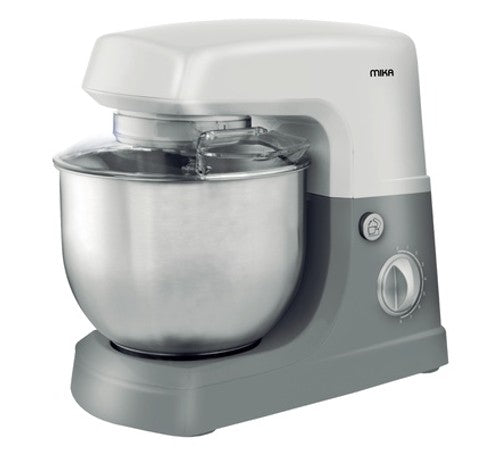
A hand mixer and a stand mixer can both help with suitable baking and preparation tasks, but their handling and working quantities differ. Choose by the mixtures you make, the attachments permitted for them and how often you repeat the job. A larger bowl or motor figure is not a universal promise that every dough can be mixed in every appliance.
This guide connects mixers with food-preparation appliances, bowls, cookware and a practical Kenyan kitchen. It is a specification-based buying guide, not an independent dough-capacity or durability test.
Hand mixer, stand mixer and combined format
Hand mixer
A hand mixer is held and guided in a suitable bowl. Check its listed tools, speed settings and workload instructions. It can suit permitted beating, whisking or mixing tasks, but the supplied attachment and recipe requirements determine what it should process.
Stand mixer
A stand mixer supports its mixing arrangement using the supplied bowl and tools. Check bowl fit, attachment roles and the manufacturer's working quantities. It can make some routines more convenient, but the bowl's full volume is not a universal dough or batter capacity.
Stand-and-hand format
A combined format provides the specific arrangements listed for that model. Confirm how it is assembled and which parts are supplied. A removable hand-mixer component does not mean every stand-mixer feature is identical to a dedicated stand model.
| Priority | Format to investigate | Question to confirm |
|---|---|---|
| Occasional permitted mixing | Hand mixer | Can I comfortably handle the session and suitable bowl? |
| Repeated baking preparation | Stand mixer | What are the working quantities for my mixtures? |
| Flexible handling | Combined stand-and-hand model | Which configurations and tools are included? |
| Particular dough recipe | Exact model and tool | Is this recipe and quantity expressly supported? |
Mika model examples
The Mika MMH102WS hand mixer lists a 300W format with five speeds, turbo and specified dough hooks. The Mika MMH101BS hand mixer is a different model with its own rating and organiser arrangement. Compare the exact instructions and attachments rather than treating their similar roles as identical specifications.
The Mika MMHS201WS stand-and-hand mixer is a 500W model with a listed 4L bowl. The Mika MMS301WG stand mixer lists a 1000W format, 5L bowl and eight speeds. These are specification examples, not proof that one can handle a particular heavy recipe better without appropriate workload information.
Use the Mika household guide for the wider appliance family and the comparison guide to distinguish rated power from measured preparation results.
Match tools to mixtures
Different tools serve different tasks. A whisk, beater and dough hook should be used for the recipes and quantities the manufacturer permits. Their presence in the box does not establish unlimited workload or compatibility with every baking method.
Write down the mixture you prepare most often: a light batter, a whipped mixture or a permitted dough. Check the appropriate attachment, working quantity, speed and operating sequence. Do not choose a tool simply because it looks strongest.
The preparation-appliance comparison explains why a mixer, chopper and blender are different formats. A machine may have overlapping tasks, but only explicitly supported functions should be counted.
Bowl capacity and workload
The bowl needs enough working room for the mixture and its movement. Full volume is not the safe quantity for every task. A batter and a dough can impose different demands even when their volumes appear similar.
Compare manufacturer recipe or workload guidance where available. If the listing does not state a working quantity for your intended dough, confirm before buying for that task. Motor watts and bowl litres should not be used to invent an unsupported kilogram rating.
For occasional preparation, a modest suitable quantity may be enough. For repeated family baking, the full session can matter more than the headline bowl size. Account for batches, assembly, ingredient addition and cleaning.
Compare convenience across the whole session
A hand mixer can be compact to store, while a stand setup can change how you handle a repeated task. Check the weight, grip or controls where information is available, and consider how the appliance is used in your own kitchen.
Include the time to assemble attachments, organise ingredients and wash parts. A larger machine can be useful for repeated workloads while taking more counter and storage space. A compact machine can suit occasional work but may require more active handling.
The small-kitchen guide helps compare the complete working footprint. A mixer should fit beside the ingredient bowls and tools, not occupy the entire space needed to prepare the recipe.
Connect mixing with the baking workflow
A mixer prepares a mixture; it does not supply every next step. You still need appropriate cookware or bakeware, a suitable cooking method and serving or storage arrangements. Check the material and temperature instructions for each item.
If you plan to use an air fryer for a permitted baking recipe, verify the appliance's recipe and accessory guidance and the useful basket space. Do not assume a full-size baking dish fits or that a microwave-only model performs convection baking.
Use the complete kitchen guide, microwave function guide and existing air-fryer guide to plan the cooking stage. The existing cookware and kitchenware guide connects the preparation with tools and serving.
Budget and ownership
Compare current prices, included tools and useful working capacity. An extra attachment can be valuable when it replaces a repeated task, while an unused accessory adds storage. Keep purchase and ongoing ownership considerations separate.
Check cleaning instructions and exact replacement compatibility. A whisk, bowl or coupling from a similar-looking product should not be assumed to fit. Keep the full model code and supplied tool list with the invoice.
The care guide explains attachment organisation. The electricity guide explains why a short mixing session cannot be costed from wattage without operating time and appropriate assumptions.
Mixer do's and don'ts
- Do fit the correct attachment before the permitted operating sequence.
- Do follow recipe, load and running-time limits for the exact model.
- Do disconnect before changing tools or handling moving-part areas.
- Do clean each component using its approved method.
- Do keep tools safely stored with the correct model.
- Don't put hands or utensils near moving tools.
- Don't infer an unlimited dough capacity from a hook or motor rating.
- Don't force a bowl, tool or attachment into an incompatible fitting.
- Don't treat every removable part as dishwasher-safe without checking.
Mixer buying FAQs
Is a stand mixer always better than a hand mixer?
No. Compare the workload, frequency, handling and space. A suitable hand mixer may serve occasional permitted tasks well, while a stand arrangement may be more convenient for repeated preparation.
Does a dough hook mean the mixer can handle any dough?
No. The exact model's workload and recipe instructions still apply. Confirm the intended dough and quantity rather than guessing from the attachment.
Does a 5L bowl mean 5L of every mixture?
No. Working quantities depend on the mixture and the manufacturer's limits. Headline bowl volume should not be treated as a universal fill instruction.
Is 1000W automatically better than 300W?
Not for every task. Compare format, permitted workload, tools and useful results. Wattage alone is not a documented comparative performance or reliability test.
Can a mixer replace my blender?
Only for explicitly overlapping tasks. Mixing with beaters or hooks and processing in a blender jug are different methods and should not be treated as interchangeable.
Choose around your recipes
Browse food-preparation appliances and the linked exact Mika models after identifying your repeated mixture and quantity. See the official Mika website and supplied instructions for manufacturer guidance. Prepared on 1 October 2026; verify current availability, accessories and prices before purchase.


